Gate3 min read
Gate 33: The Gate of Retreat
Gate 33 in Human Design is the Gate of Retreat in the Throat Center, a gate that knows when to step back and reflect.
Is Gate 33 in your chart?
Your free chart shows your type, authority, profile, centers, channels and gates in one picture.
- Center
- Channel partner
- I Ching hexagram
- Hexagram 33
- Circuit
- Collective (Abstract)
On this page
Overview
Gate 33 corresponds to Hexagram 33 of the I Ching, 'Retreat'. It is one of two natural storytelling gates in the Throat. Unlike the stories told through Gate 56, yours are contemplative and serious rather than embellished. They draw on real life experience and can carry the kind of moral you find in an ancient tale.
The authenticity of your stories comes from what the Universe sends you to encounter. Experiences and trials arrive so fast and in such volume that you occasionally need to step back and take a complete break. That retreat gives you the strength and clarity to see the wisdom in what you have lived.
During a retreat you review your encounters and reach your conclusions. Gate 33 pushes you into the middle of the action so you can later guide others from a deep store of experience.
Your memory is sharp, holding an internal archive that could hand any publisher or filmmaker more material than they could use. More can happen to you in a single day than most people meet in a week.
The difficulty is knowing when to pull back from the front line. Get it wrong and you face chronic fatigue and near collapse. A wise person knows when to retreat for their own well-being. Find it in spas, quiet retreats, the countryside, meditation, or gentle hobbies. Time to recharge is essential for keeping up with the pace of your life.
You also tend toward secrecy. You share stories for the pleasure and insight of others, but what you learn in confidence stays hidden — until you meet someone with Gate 13. Then be careful: their gift for listening will mine the knowledge and confidences you hold, until your secrets are drawn out despite you.
Transit Meaning
When Gate 33 is activated by transit, it carries a collective energy of retreat and reflection. For a while, people may feel the need to step back from active engagement and process recent experience. Withdrawal here is not weakness; it is a way to integrate lessons before moving forward.
You may notice an unusual pull toward privacy, or find yourself revisiting memories and seeing them with fresh insight. Others around you may seem more withdrawn than usual. Honor this reflective mood rather than reading it as antisocial, and use the window to process your experiences before you share your conclusions.
This Gate in Love & Relationships
You give yourself fully to love, absorbing every detail and emotional nuance, and then need solitude to process everything you have taken in. This is not disinterest or detachment; it is how your design turns shared experience into lasting wisdom and a deeper appreciation of your partner.
The challenge is that your need for retreat can look like emotional unavailability. When you withdraw to reflect, a partner may feel shut out, especially one who processes emotion through conversation rather than solitude. It helps to say plainly that you need space, and to reassure them that retreating is about processing, not pulling away.
Gate 33 also makes you the keeper of the relationship's story. You remember the details, the turning points, the conversations that mattered, and the quiet moments that revealed something true about your connection. That inner archive lets you see how far you have come together and share it with your partner in a way that deepens the bond and reminds you both of what you are building.
The most fulfilling love for Gate 33 involves a partner who values both closeness and independence — someone who does not take your withdrawal personally and welcomes you back from a retreat with openness rather than resentment. In return, you bring a depth of reflection and storytelling that keeps the relationship meaningful, turning everyday moments into a narrative worth treasuring.
Know when Gate 33 is active
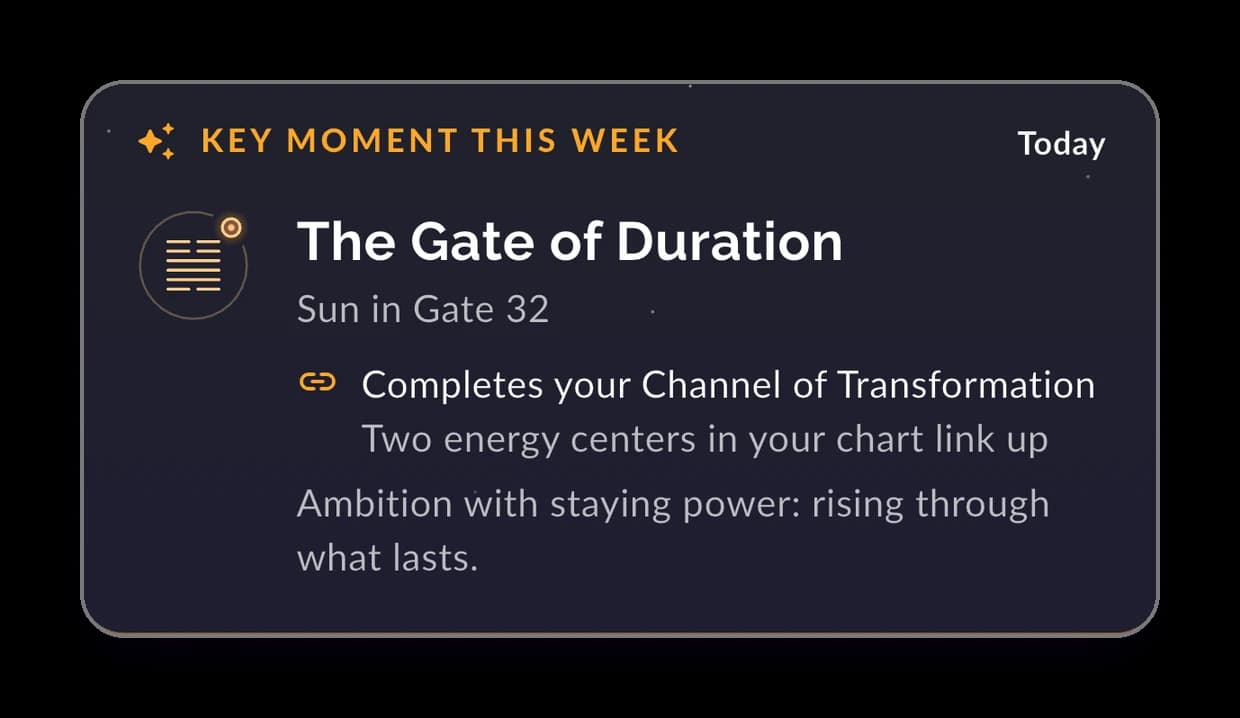
The planets move through the gates all year. Week Ahead in the app shows when one moves into a gate, and what it completes in your own chart.
Common questions
How does Gate 33 influence storytelling ability?
With Gate 33 defined, you are a natural storyteller whose tales carry weight because they come from real experience rather than embellishment. Unlike the colorful exaggeration of Gate 56, Gate 33 stories are contemplative and grounded, often distilling real lessons into narrative. Your sharp memory holds an internal archive of experience that enriches every story you tell.
Why is retreat important for Gate 33?
Without regular retreat, Gate 33 people risk chronic fatigue and burnout, because they take in more experience in a single day than most people meet in a week. Withdrawal is not avoidance but a necessary phase of the creative cycle, where raw experience turns into wisdom. Spas, nature, meditation, and quiet solitude all recharge you and keep your storytelling alive.
What does a Gate 33 transit feel like?
During a Gate 33 transit, you may feel a strong pull toward solitude and reflection. Past experiences resurface, asking to be understood. This is not a time for launching new ventures but for processing what has already happened. The insights that surface now can later be shared as stories and lessons that serve your broader community.